
🚧 Gatekeepers are ineffective
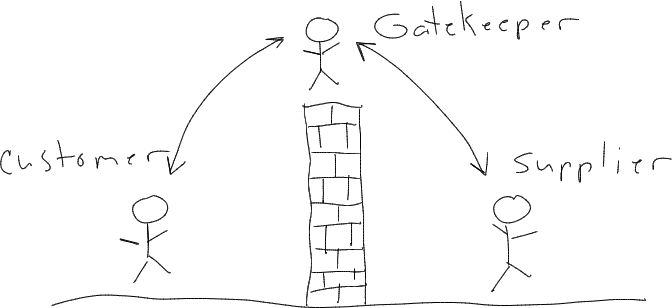
In the context of complex systems, gatekeepers are ineffective. In product development, a gatekeeper is often a middle manager who relays information from one person to another.
As an example, we have been struggling for the past year to get an installation of a monitoring system doing what the customer wanted. The data was coming from a PLC and was not in a usable format. I asked several times if the PLC program could be modified, and was told no. Finally I asked if there happened to be any more registers already in the PLC that contained the data we needed. There were, and the solution was then simple. This process could have been drastically shortened if I could have had direct communication with the PLC programmer early on.
Gatekeepers are necessary at times to protect people doing work from needless interruptions, or because of NDAs and security restrictions. But even in the scenario of preventing interruptions, I'm not sure gatekeepers are the solution rather than modifying the process. Perhaps all requests could be put into an issue tracking system and then prioritized according to the business needs. Processes like Scrum exist for this reason.
Any time we find ourselves relaying information (example: copying text from one email to another email), we should ask ourselves: should I just connect these two people and have them talk directly? If not, why not?
A gatekeeper tightly controls who can do their job, thus tends to do things in a closed way.
Enablers do things in an open way that enables others to easily contribute. The enabler mindset is not a free-for-all as there can still be reviews, checks, and quality standards. But, there are no barriers to work and communication shifting to where it is needed.
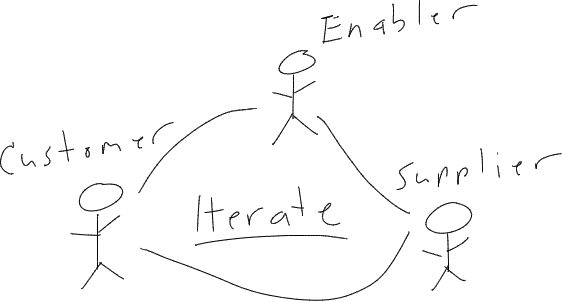
Are you a gatekeeper or an enabler?