🦴 When LTS fits — and when it doesn't
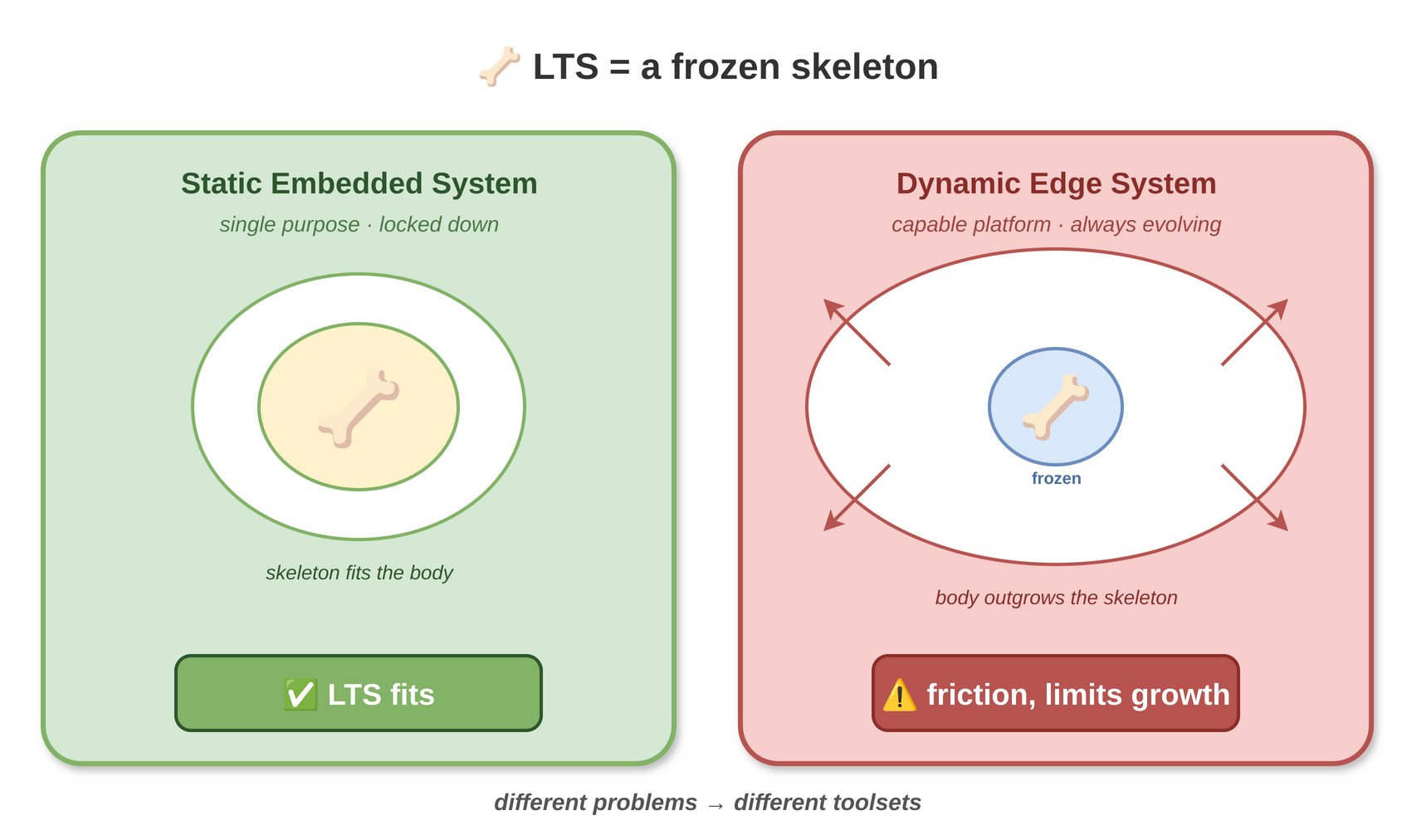
LTS stands for Long-Term Support, which refers to software versions that receive updates, bug fixes, and security patches for an extended period, typically aimed at providing stability and reliability. For deeply embedded, single-purpose systems, or locked-down enterprise laptops where users are not allowed to install software, LTS makes sense.
For dynamic software systems (the browser is a good example), the only path is forward. It's hard to predict exactly what pages need loading tomorrow, where the user will go next, what problems will occur, what security issues need patching, what new features need supporting, etc. Edge systems are trending in that direction. They are capable, expandable platforms whose future needs are hard to predict.
Trying to keep an operating system pinned to an LTS release while continuously evolving everything on top is a bit like freezing a creature's skeleton while expecting the rest of its body to grow and adapt around it. The structure may be stable, but over time the muscles, organs, and connective tissue stop fitting cleanly. Eventually, the mismatch creates friction, limits movement, and makes further growth harder instead of easier.
When implementing an embedded OS, it's important to decide: is this 1) a traditional static embedded system, or 2) a dynamic edge system? These are different problems and require different tool-sets.